Keysta: How the Y2K Geometric Font is Reshaping Modern Brand Identity
In the rapidly evolving landscape of digital design, few trends have demonstrated as much staying power and cultural resonance as the resurgence of early 2000s aesthetics. As we move further into an era defined by digital saturation and algorithmic content curation, designers and brand strategists are increasingly looking backward to forge a path forward. At the forefront of this retro-futuristic movement is Keysta, a bold geometric typeface that encapsulates the raw energy of the Y2K era while offering the precision required for contemporary applications. More than just a nostalgic nod to the past, Keysta represents a strategic tool for professionals aiming to cut through visual noise with clarity, attitude, and a distinct cyber-edge.
The Anatomy of a Retro-Futurist Typeface
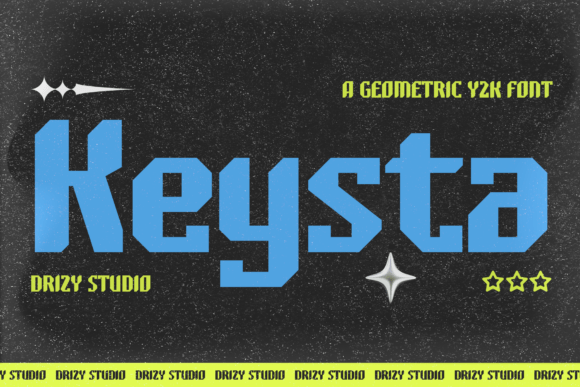
To understand why Keysta has captured the attention of creatives and entrepreneurs alike, one must first examine its structural DNA. Unlike the soft, rounded sans-serifs that dominated the late 2010s, Keysta embraces angularity and modularity. It is a display font constructed from clean geometric shapes and sleek curves that mimic the interface designs of early personal computers and mobile devices. This architectural approach creates a visual language that feels both mechanical and organic—a duality that mirrors the human-digital relationship of the turn of the millennium.
The font's defining characteristic lies in its punchy, high-contrast letterforms. Each character is designed to stand out independently while maintaining harmony within a word or phrase. This makes it exceptionally versatile for headlines, album art, and streetwear branding where immediate impact is non-negotiable. By merging the rigid logic of early tech interfaces with the fluidity of modern fashion, Keysta offers a unique aesthetic proposition: it looks like the future imagined in 2000, but rendered with the technical sophistication of today.
Bridging Nostalgia and Innovation
The appeal of Keysta extends far beyond simple nostalgia. While the Y2K aesthetic is often associated with a specific generation's childhood memories, its current popularity signals a broader shift in consumer psychology. In a world that often feels uncertain and complex, there is a comforting familiarity in the optimistic, albeit naive, technological visions of the early 2000s. However, simply copying old styles rarely yields long-term success. The true value of Keysta lies in its ability to bridge the gap between that nostalgic sentiment and modern innovation.
For marketers and brand managers, this typeface serves as a vehicle to communicate "cool" without being overtly dated. It taps into the collective memory of the internet's adolescence—the era of dial-up sounds, pixelated graphics, and unbridled optimism about the digital frontier—while stripping away the clunky execution of that time. The result is a polished, futuristic look that resonates with Gen Z, who are driving the trend, and Millennials, who are curating it. This cross-generational appeal makes Keysta a powerful asset for brands targeting a wide demographic spectrum.
Strategic Applications in Modern Design Workflows
The integration of a specialized font like Keysta into a professional workflow requires more than just downloading a file; it demands a rethinking of how typography functions within a brand ecosystem. As digital platforms continue to evolve, the need for adaptable, high-impact visuals has never been greater. From social media thumbnails to large-scale event posters, the versatility of this geometric font allows creators to maintain consistency across diverse mediums.
- Digital Interfaces and Web Design: In web development, where user attention spans are fleeting, Keysta provides an immediate hook. Its bold strokes render beautifully on high-resolution screens, ensuring legibility even at smaller sizes when used for navigation elements or call-to-action buttons. The cyber feel of the font aligns perfectly with the growing demand for "brutalist" or neo-brutalist web design trends, which prioritize functionality and stark aesthetics over ornate decoration.
- Fashion and Streetwear Branding: The fashion industry has always been a bellwether for typographic trends. With the rise of streetwear as a dominant force, logos need to be graphic, memorable, and instantly recognizable. Keysta's modular shapes make it ideal for apparel prints, where the text often acts as the primary graphic element. Brands utilizing this font can project an image of edginess and cultural awareness, signaling to consumers that they are part of the current zeitgeist.
- Musical and Entertainment Packaging: Album covers and promotional materials for music releases have seen a massive influx of Y2K-inspired imagery. Musicians seeking to establish a persona that blends retro vibes with modern production quality find Keysta to be an essential component of their visual identity. The font's ability to convey rhythm and energy makes it a natural fit for genres ranging from hyperpop to electronic dance music.
Adapting to Changing Consumer Expectations
Consumer expectations regarding digital content are shifting rapidly. Audiences today are visually literate; they can distinguish between genuine style and superficial trend-chasing. They crave authenticity and depth, even in playful designs. This is where the nuanced design of Keysta becomes relevant. It does not merely replicate the look of the past; it refines it. The clean lines and balanced proportions ensure that the font remains timeless rather than becoming a fleeting fad.
Furthermore, the rise of short-form video content on platforms like TikTok and Instagram Reels has necessitated a new approach to typography. Text overlays must be readable, impactful, and stylistically consistent with the video's mood. Keysta's strong geometric forms hold up well against dynamic backgrounds and fast-paced editing, making it a practical choice for content creators who need to capture attention within seconds. The font's inherent "cyber" aesthetic also pairs seamlessly with the glitch effects, neon gradients, and digital distortions that are staples of modern video editing.
The Business Case for Distinctive Typography
For entrepreneurs and business leaders, the choice of typography is a critical decision that influences brand perception and market positioning. In a crowded marketplace, differentiation is key. Generic fonts dilute brand identity, whereas distinctive typefaces like Keysta can become a signature element of a company's visual language. By adopting a font that embodies the spirit of the current cultural moment, businesses can position themselves as innovators and trendsetters.
This is particularly true for startups and creative agencies operating in the tech, lifestyle, and entertainment sectors. These industries thrive on the perception of being "ahead of the curve." Utilizing Keysta signals to potential clients and customers that the brand understands the intersection of technology, culture, and design. It suggests a forward-thinking mindset that values both heritage and progress. Moreover, the versatility of the font allows for cost-effective scaling across various marketing channels, from digital ads to physical merchandise, ensuring a cohesive brand experience.
The economic implications of the Y2K revival are significant, influencing everything from retail sales to stock market valuations of tech companies. As the aesthetic permeates mainstream culture, the demand for assets that support this look will only grow. Early adopters who integrate Keysta into their brand strategies now are likely to reap the benefits of sustained relevance as the trend matures. Rather than viewing the font as a temporary accessory, savvy professionals recognize it as a foundational element of a robust, future-proof design system.
Future-Proofing Your Creative Output
As we look toward the future of design, the lines between eras will continue to blur. The cyclical nature of trends ensures that what was once considered outdated will eventually return, reinvented for a new context. Keysta stands at the intersection of this cycle, offering a design solution that honors the past while remaining firmly rooted in the present. Its geometric purity and futuristic flair make it adaptable to emerging technologies, including augmented reality (AR) and virtual reality (VR) environments, where clear, bold typography is essential for user interaction.
For freelancers and independent creators, mastering the use of such fonts is a competitive advantage. It demonstrates an ability to anticipate market shifts and deliver work that resonates with current audiences. Whether designing a logo for a new crypto startup, creating a poster for a music festival, or developing a brand identity for a sustainable fashion line, Keysta offers the flexibility to meet diverse needs with a unified aesthetic voice.
Ultimately, the story of Keysta is not just about a font; it is about the ongoing dialogue between technology and culture. It reflects our enduring fascination with the digital age and our desire to reimagine it through the lens of history. By embracing this bold, geometric typeface, designers and businesses can create work that is not only visually striking but also culturally significant. In a world that moves at breakneck speed, having a tool that helps you stop the scroll and make a lasting impression is invaluable. Keysta provides exactly that—a way to speak the language of tomorrow using the vocabulary of yesterday.
As the Y2K aesthetic continues to evolve, so too will the tools we use to express it. Keysta remains a steadfast companion in this journey, offering a blend of nostalgia and innovation that empowers creators to push boundaries and define the next chapter of digital design. For those ready to elevate their work and connect with a global audience hungry for fresh perspectives, the possibilities with this geometric powerhouse are limitless.