Funky Bloom: A Practical Review of the Retro Bubble Font
In the crowded landscape of digital typography, finding a typeface that balances distinct personality with functional readability is a constant challenge for designers. Funky Bloom enters this space as a deliberate nod to the late 1960s and early 1970s aesthetic, offering a playful, retro bubble-style approach that prioritizes soft curves and organic shapes. Unlike many novelty fonts that sacrifice legibility for style, Funky Bloom attempts to maintain a consistent stroke weight and smooth edges, making it a viable option for more than just decorative flourishes. For professionals, entrepreneurs, and creative hobbyists looking to inject a specific nostalgic vibe into their work, understanding the practical applications and limitations of this font is essential before integrating it into a workflow.
Design Philosophy and Visual Characteristics
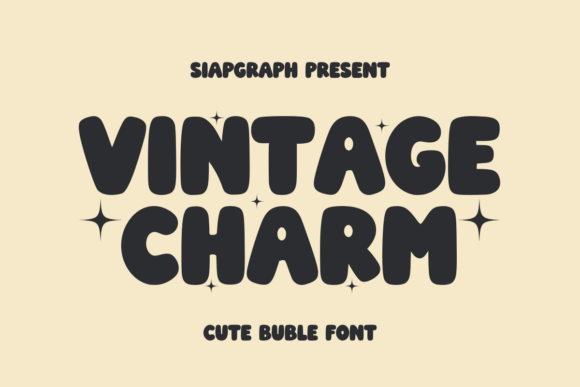
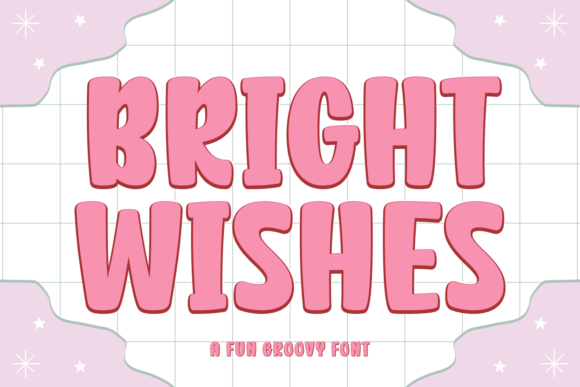
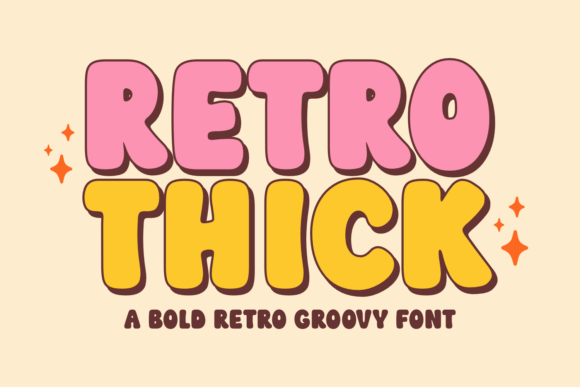
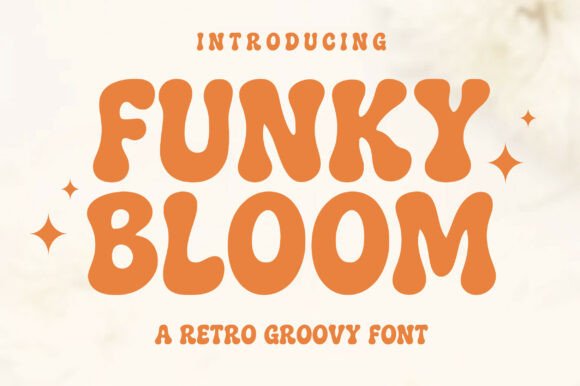
The core appeal of Funky Bloom lies in its "blob" aesthetic. Each character is constructed with rounded terminals and inflated forms that mimic the hand-drawn lettering popular in vintage psychedelic art and 70s album covers. This design choice creates an immediate emotional response: warmth, friendliness, and a sense of approachability. The font avoids sharp angles entirely, relying on continuous, flowing lines to define its structure.
From a technical standpoint, the consistency of the stroke weight is a significant strength. Many bubble fonts suffer from erratic thickness, where some parts of a letter are too thin while others are overly heavy, leading to visual clutter at smaller sizes. Funky Bloom mitigates this by maintaining a relatively uniform mass across the alphabet. This consistency ensures that when the font is scaled down for use in social media graphics or small print runs, the characters remain distinguishable. The smooth edges further contribute to a clean presentation, reducing the jagged artifacts often seen in lower-quality vector conversions.
Practical Applications in Branding and Marketing
While the retro style might seem niche, its utility extends across several professional sectors. In branding, Funky Bloom serves as an excellent tool for businesses targeting a younger demographic or those wishing to position themselves as fun, accessible, and non-corporate. It is particularly effective for lifestyle brands, boutique cafes, craft breweries, and children's product lines. The cheerful nature of the typeface can soften a brand's image, making it feel more human and less transactional.
Key use cases include:
- Headings and Logos: The bold, friendly look makes Funky Bloom ideal for primary headlines where attention-grabbing capability is paramount. It stands out effectively against minimalist backgrounds.
- Merchandise Design: T-shirt quotes, sticker packs, and tote bag prints benefit immensely from the font's organic shape. The bubbly letters translate well to screen printing and vinyl cutting processes.
- Digital Artwork: For web banners, app interfaces, and social media posts, the font adds a layer of visual interest without overwhelming the user experience, provided it is used sparingly.
- Educational Materials: Teachers and content creators producing materials for kids' projects will find the font engaging and easy to read for young audiences.
However, the versatility of Funky Bloom has boundaries. It is not designed for body copy. Using it for paragraphs of text would result in poor readability due to the density of the characters and the lack of traditional serif or sans-serif cues that guide the eye through long-form content. Its value is strictly tied to its function as a display typeface.
Performance in Real-World Scenarios
When evaluating a font for production, one must consider how it behaves under various constraints. In print environments, Funky Bloom performs reliably. The thick strokes hold up well even on textured paper stocks, which are common in eco-friendly packaging and artisanal product labeling. The warm, nostalgic feel aligns perfectly with the tactile nature of physical media, enhancing the perceived quality of the item.
In digital contexts, the font's performance depends heavily on resolution and rendering engines. Because the shapes are organic rather than geometric, they require high-resolution vector files to prevent aliasing on lower-end screens. When exported correctly, the smooth edges render cleanly on modern displays. However, designers should be cautious when using Funky Bloom for very small UI elements, such as navigation buttons or footnotes. The intricate curves may lose definition if the font size drops below a certain threshold, potentially causing the text to blur or merge.
Another critical factor is color application. The solid, filled nature of the bubble letters allows for gradient fills and texture overlays without breaking the character structure. This flexibility makes it a favorite for motion graphics and animated logos, where the fluid shapes can be manipulated to create dynamic effects that rigid typefaces cannot achieve.
Audience Fit and Strategic Considerations
Who benefits most from adopting Funky Bloom? The font is best suited for creatives who need to communicate a message of joy, creativity, or nostalgia. Entrepreneurs launching a new line of organic snacks, bloggers running a lifestyle site focused on vintage culture, and marketers creating campaigns for summer festivals will find the font's attributes highly aligned with their goals.
Conversely, industries requiring strict formality—such as legal services, financial institutions, or medical communications—should avoid this typeface. The playful, informal nature of the bubbles could undermine the authority and trustworthiness these sectors strive to project. The decision to use Funky Bloom should always be contextualized within the broader brand voice. If the goal is to appear serious and efficient, this font is likely a mismatch.
For freelancers and agencies, having a reliable display font like Funky Bloom in their toolkit adds variety to their portfolio. It allows them to offer clients a distinct stylistic option that differentiates their work from the sea of standard sans-serifs. The font's ability to stand out in both print and digital projects makes it a cost-effective asset for expanding creative offerings without needing custom illustration for every headline.
Limitations and Long-Term Value
No typeface is universally applicable, and Funky Bloom is no exception. Its primary limitation is its strong stylistic association with the 1970s. While trends cycle, there is a risk that the font could feel dated if overused or applied to a project that requires a timeless aesthetic. Designers must ensure that the retro vibe complements the overall design system rather than dominating it to the point of distraction.
Additionally, the font's complexity means it requires careful pairing. It works best when contrasted with a simple, neutral sans-serif or serif font for body text. Pairing it with another decorative typeface would create visual chaos. The reliability of Funky Bloom also depends on the availability of complete character sets, including ligatures, alternate glyphs, and special characters, which are necessary for international projects or complex layouts. Users should verify the completeness of the font file before committing to large-scale production.
Despite these considerations, the long-term value of Funky Bloom remains high for specific niches. As long as there is a demand for retro-inspired design and a need for friendly, approachable typography, this font will serve a useful purpose. Its consistent stroke weight and smooth construction ensure that it ages better than many low-quality alternatives, maintaining its integrity across various mediums.
Final Assessment
Funky Bloom represents a well-executed take on the retro bubble genre, offering a blend of charm and functionality that appeals to a wide range of creative professionals. It succeeds in delivering a bold, friendly look that captures the essence of 70s design while remaining practical for modern applications. By understanding its strengths in headings and merchandise, and acknowledging its limitations regarding body text and formal contexts, designers can leverage Funky Bloom to add a touch of bubbly retro fun to their projects. Whether for a startup logo, a community event poster, or a personal creative endeavor, this font provides a reliable, eye-catching solution that stands the test of time within its intended scope.