Cute Cowboy: The Rise of Whimsical Western Typography in Modern Design
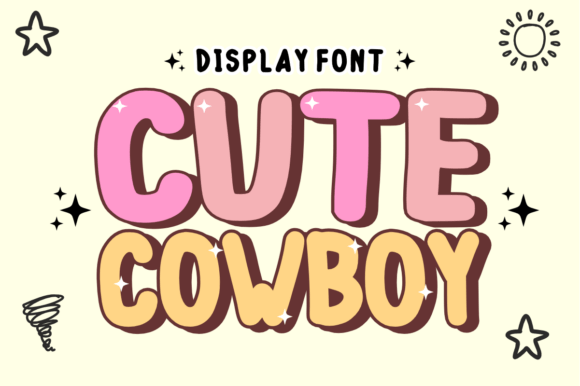
In the ever-evolving landscape of digital and print design, a distinct shift is occurring away from sterile minimalism toward textures that evoke emotion, nostalgia, and personality. At the forefront of this movement is a specific aesthetic that blends the ruggedness of the American frontier with the softness of modern pop culture. This unique intersection has given rise to typefaces like Cute Cowboy, a display font that challenges the traditional perception of Western themes. Rather than relying on distressed serifs or sharp, aggressive edges associated with classic cowboy imagery, Cute Cowboy offers a chunky, bubble-style alternative that feels inviting, playful, and undeniably charming.
For designers, marketers, and creators navigating the current visual economy, understanding the power of such typography is essential. It is not merely about selecting a font for a logo; it is about communicating a brand voice that balances toughness with approachability. As audiences increasingly crave authenticity and warmth in their digital interactions, fonts that can convey a "tough but adorable" vibe are becoming indispensable tools in the creative toolkit.
The Evolution of Western Aesthetics in Contemporary Culture
Western motifs have always held a special place in popular culture, but their interpretation has undergone significant changes over the last decade. Historically, cowboy-themed designs were often rigid, adhering strictly to historical accuracy or gritty realism. However, modern cultural trends, driven by the resurgence of retro styles and the influence of children's media, have softened these edges. We see this in everything from fashion runways featuring pastel denim to social media trends celebrating "cottagecore" meets "cowgirl."
This evolution reflects a broader societal desire for comfort and whimsy. In an era dominated by high-stress news cycles and complex global issues, there is a psychological pull toward designs that feel safe and fun. Cute Cowboy capitalizes on this shift perfectly. It strips away the intimidation factor of traditional Western typography while retaining the iconic silhouette of the genre. The result is a typeface that feels familiar yet fresh, allowing brands to tap into the nostalgic appeal of the Wild West without alienating a younger, more diverse audience.
Furthermore, the integration of bubble letterforms into Western themes signals a maturation in design trends. It suggests that genres do not need to be mutually exclusive. A font can be both rustic and modern, bold and soft. This hybridization is what makes Cute Cowboy relevant today. It speaks to a generation of consumers who value individuality and are drawn to visuals that break conventional molds.
Why Chunky Bubble Styles Are Taking Over Headlines
The specific characteristics of the Cute Cowboy font—its bold, rounded letterforms—are not accidental. They align with current user interface (UI) and user experience (UX) principles that prioritize readability and engagement. In the fast-paced environment of social media feeds and mobile browsing, thick, soft shapes catch the eye more effectively than thin, intricate lines. These forms are inherently legible at various sizes, making them ideal for high-impact headlines where immediate comprehension is key.
Moreover, the "chunky" nature of the font allows for vibrant, layered color schemes. Unlike serif fonts that can become muddy when filled with gradients or patterns, the solid structure of Cute Cowboy provides a stable canvas for creative experimentation. Designers can apply neon glows, texture overlays, or multi-color fills without losing the integrity of the letterforms. This versatility is crucial for modern marketing campaigns that require assets to perform across multiple platforms, from Instagram stories to large-scale event signage.
Practical Applications for Professionals and Creators
The utility of a display font extends far beyond simple decoration. For professionals ranging from freelance graphic designers to corporate marketing managers, choosing the right typeface is a strategic decision. Cute Cowboy serves as a versatile asset that can elevate projects in several specific sectors, offering a solution to the common problem of finding a font that is thematic yet accessible.
Children's Apparel and Educational Materials
One of the most natural fits for this typeface is the children's market. Parents and educators are constantly seeking materials that are engaging and easy to read. The rounded, friendly shapes of Cute Cowboy mimic the handwriting style often found in early childhood education, making text less intimidating for young readers. When applied to t-shirts, storybooks, or classroom posters, the font instantly communicates a sense of fun and adventure. It transforms a standard western theme into something inclusive and joyful, perfect for a brand looking to stand out in the crowded kids' apparel space.
Event Signage and Party Invitations
In the realm of event planning, first impressions are made through invitations and signage. Whether organizing a birthday party, a themed wedding, or a community festival, the tone set by the typography is critical. Traditional western fonts can sometimes feel too formal or harsh for a celebratory occasion. Cute Cowboy, with its whimsical flair, strikes the perfect balance. It tells guests to expect a lively, spirited atmosphere. The font's ability to handle high-contrast colors ensures that important details on invitations remain clear and visually striking, even when printed on textured paper or displayed on digital screens.
Social Media Graphics and Brand Identity
For businesses and influencers, consistency in visual identity is paramount. Social media algorithms favor content that stops the scroll, and bold typography is a proven method to achieve this. Using Cute Cowboy for captions, story highlights, or promotional graphics allows brands to inject personality into their feed. It works particularly well for lifestyle brands, craft businesses, and food services that want to project a warm, welcoming image. The font's slightly retro vibe also taps into the current trend of "retro-modern" aesthetics, appealing to adults aged 20–50 who appreciate a nod to the past with a contemporary twist.
Integrating Bold Cuteness into Your Workflow
Adopting a new typeface like Cute Cowboy requires more than just downloading a file; it involves understanding how to pair it effectively within a design system. While the font is strong enough to stand alone as a headline, it benefits from careful pairing with simpler sans-serif or slab-serif fonts for body text. This contrast ensures that the playful nature of the display font does not overwhelm the reader during longer passages.
Designers should also consider the context of color usage. Because the letterforms are thick and soft, they act as excellent containers for color. Experimenting with gradients that transition from sunset oranges to deep teals can enhance the "western" feel while maintaining the "cute" aspect. Additionally, adding subtle drop shadows or outlines can give the letters depth, making them pop off the page or screen. This layering technique is essential for creating dynamic compositions that resonate with modern audiences accustomed to rich, interactive visuals.
It is also worth noting the importance of licensing and scalability. As a display font, Cute Cowboy is optimized for larger sizes. Using it for small body text may compromise readability. Professionals must adhere to best practices regarding font sizing to ensure accessibility. By respecting the intended use cases, creators can maximize the impact of the typeface while maintaining a polished, professional finish.
The Future of Themed Typography
As we look ahead, the demand for specialized, character-driven typefaces will likely continue to grow. The internet has fragmented audiences into niche communities, each with its own visual language. Fonts like Cute Cowboy cater to these micro-communities, providing a shorthand for specific moods and themes. The fusion of Western heritage with modern cuteness is not a fleeting fad but a reflection of a deeper cultural appreciation for storytelling through design.
For entrepreneurs and creatives, staying attuned to these shifts means being ready to adopt tools that facilitate connection. A font that can make a business feel friendly, a product feel exciting, or an event feel memorable is a powerful asset. By leveraging the unique qualities of Cute Cowboy, designers can create work that not only looks good but also feels right for the moment. In a world saturated with content, the ability to evoke a genuine emotional response through a simple choice of typeface remains one of the most effective strategies for success.
Ultimately, the charm of Cute Cowboy lies in its ability to bridge gaps. It connects the old with the new, the tough with the tender, and the professional with the playful. For anyone looking to add a dose of spirited fun to their creative projects, this typeface offers a reliable, versatile, and visually stunning solution that aligns perfectly with the evolving needs of the modern creative industry.