Vintage Bloom: A Timeless Script for Modern Design
In the ever-evolving landscape of digital and print design, there is a persistent yearning for authenticity. As screens dominate our daily lives, audiences increasingly crave textures, styles, and aesthetics that feel human, tactile, and rooted in history. This is where Vintage Bloom emerges as a powerful tool for creators seeking to bridge the gap between classic elegance and contemporary utility. It is not merely a typeface; it is an atmospheric element that can instantly transform a flat layout into a narrative-rich experience.
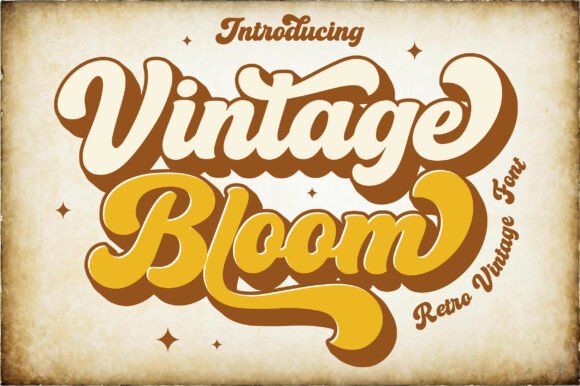
Vintage Bloom is defined by its bold and elegant retro vintage script style. Unlike rigid sans-serifs or overly decorative display fonts, this typeface strikes a delicate balance. Its smooth curves and playful flow bring a touch of nostalgia to any design, evoking the golden eras of mid-century advertising, hand-lettered shop signs, and romantic correspondence from decades past. Yet, despite its historical references, it remains perfectly legible and adaptable for modern applications.
The Anatomy of Nostalgic Elegance
To truly understand the value of Vintage Bloom, one must look beyond the surface and examine its structural characteristics. The font is engineered with a specific rhythm that mimics the natural motion of a fountain pen gliding across textured paper. This "playful flow" is achieved through varying stroke widths and organic connections between letters, which prevent the text from feeling mechanical or synthetic.
The "bold" aspect of the design ensures that even at smaller sizes, the character of the font remains intact. Many script fonts suffer when scaled down, becoming illegible blobs of ink. However, Vintage Bloom maintains clarity while retaining its decorative flair. This makes it a versatile choice for designers who need a script that commands attention without sacrificing readability. The smooth curves act as visual anchors, guiding the eye naturally from one word to the next, creating a sense of movement and warmth that blocky typography simply cannot achieve.
Why Retro Styles Resonate Today
The resurgence of retro aesthetics is not accidental. In a world saturated with minimalist, sterile interfaces, vintage styles offer a sense of comfort and familiarity. When you apply Vintage Bloom to a project, you are tapping into a collective memory of craftsmanship. It suggests quality, tradition, and a story behind the product or message.
This psychological connection is crucial for branding. Consumers often associate vintage typography with established heritage brands, artisanal goods, and premium experiences. By integrating this font, businesses can subtly communicate values of reliability and care. It is a visual shorthand that says, "We respect the past, but we are relevant today."
Practical Applications Across Industries
The versatility of Vintage Bloom extends far beyond simple decoration. It serves as a functional asset in various professional contexts, offering distinct advantages depending on the medium.
- Logo Design: For startups and small businesses, a logo needs to be memorable. Vintage Bloom provides an immediate point of differentiation. Whether for a boutique coffee shop, a vintage clothing store, or a creative agency, the font adds a layer of personality that generic geometric logos lack.
- Apparel and Merchandise: T-shirts and tote bags are canvases for self-expression. The bold nature of this script ensures that text-based graphics stand out against fabric. The playful flow works exceptionally well for slogans, band names, or event titles, giving streetwear a sophisticated yet approachable edge.
- Packaging Solutions: In the food and beverage industry, packaging is the first point of contact with the customer. Using Vintage Bloom on labels for jams, craft beers, or baked goods can elevate a product from a commodity to a curated treat. It implies that the contents were made with traditional methods and high-quality ingredients.
- Invitations and Stationery: Weddings, anniversaries, and formal gatherings benefit immensely from the timeless charm of this font. It brings a sense of occasion and romance to invitations, making the recipient feel special before they even read the details.
Integrating Vintage Bloom into Branding
When building a brand identity, consistency is key. Vintage Bloom acts as the emotional core of the visual system. However, it is rarely used in isolation. To maximize its impact, it should be paired with complementary typefaces. A clean, neutral sans-serif or a sturdy slab serif often works best to ground the whimsical nature of the script. This contrast creates a hierarchy where Vintage Bloom draws the eye for headlines and focal points, while the secondary font handles body copy and informational text.
This combination allows for a brand that feels both warm and professional. It avoids the trap of looking too "quaint" or outdated by balancing the retro elements with modern layout principles. The result is a cohesive identity that feels timeless rather than dated.
Evaluating Suitability: Strengths and Considerations
While Vintage Bloom is a robust tool, it is not a universal solution for every design challenge. Understanding its limitations is just as important as recognizing its strengths. Like any specialized font, its effectiveness depends heavily on context and execution.
Strengths:
- Emotional Connection: It instantly establishes a mood of nostalgia and warmth.
- Distinctiveness: In a sea of corporate fonts, it offers unique visual interest.
- Adaptability: It scales well for both large headers and moderate-sized accents.
Considerations and Limitations:
One primary consideration is legibility in long-form text. Because Vintage Bloom is a script font with complex curves, it is not suitable for paragraphs or dense blocks of information. It should be reserved for headlines, short phrases, and emphasis. Overusing it can lead to visual fatigue and reduce the overall professionalism of a document.
Additionally, color and background play a significant role. The smooth curves of the font require sufficient contrast to remain visible. Placing light-colored text on a busy pattern can render the intricate details invisible. Designers must ensure that the environment around the font supports its delicate features. Finally, while the font is retro, it must be applied with a modern sensibility. Pairing it with clashing design trends can make the final output look like a costume rather than a cohesive brand.
Real-World Scenarios: Bringing Words to Life
Imagine a local bakery launching a new line of artisanal sourdough breads. Their current branding is utilitarian, using standard fonts that blend in with industrial competitors. By switching their main logo and packaging headers to Vintage Bloom, they immediately signal a shift in quality. The "bold and elegant" strokes suggest a master baker's touch, while the "playful flow" hints at the joy of baking. The packaging no longer looks like a mass-produced item; it looks like a gift.
Consider another scenario: a wedding planner designing invitations for a couple who loves 1950s cinema. Standard calligraphy might feel too stiff, while a handwritten font could look messy. Vintage Bloom hits the sweet spot, offering the structure of professional design with the soul of a personal note. It sets the tone for the entire event before the guests even arrive.
For a tech startup aiming to humanize its image, incorporating this font into marketing materials for a community event or a merchandise drop can soften the corporate edge. It shows that the company has a personality and values creativity. It is a strategic move to build rapport with users who might otherwise find the brand cold or impersonal.
Conclusion: A Blend of Classic Beauty and Modern Design
Ultimately, Vintage Bloom represents more than just a collection of characters; it is a design philosophy. It embodies the idea that the past holds valuable lessons for the present. Its smooth curves and playful flow bring a touch of nostalgia to any design, proving that old styles can still speak loudly in a modern world.
Whether you are a graphic designer crafting a logo, a business owner rebranding your packaging, or an individual planning a special event, this font offers a unique opportunity to add warmth and creativity wherever it’s used. By understanding its characteristics and applying it thoughtfully, you can create visuals that resonate deeply with your audience. Bring your words to life with Vintage Bloom—a perfect blend of classic beauty and modern design that stands the test of time.